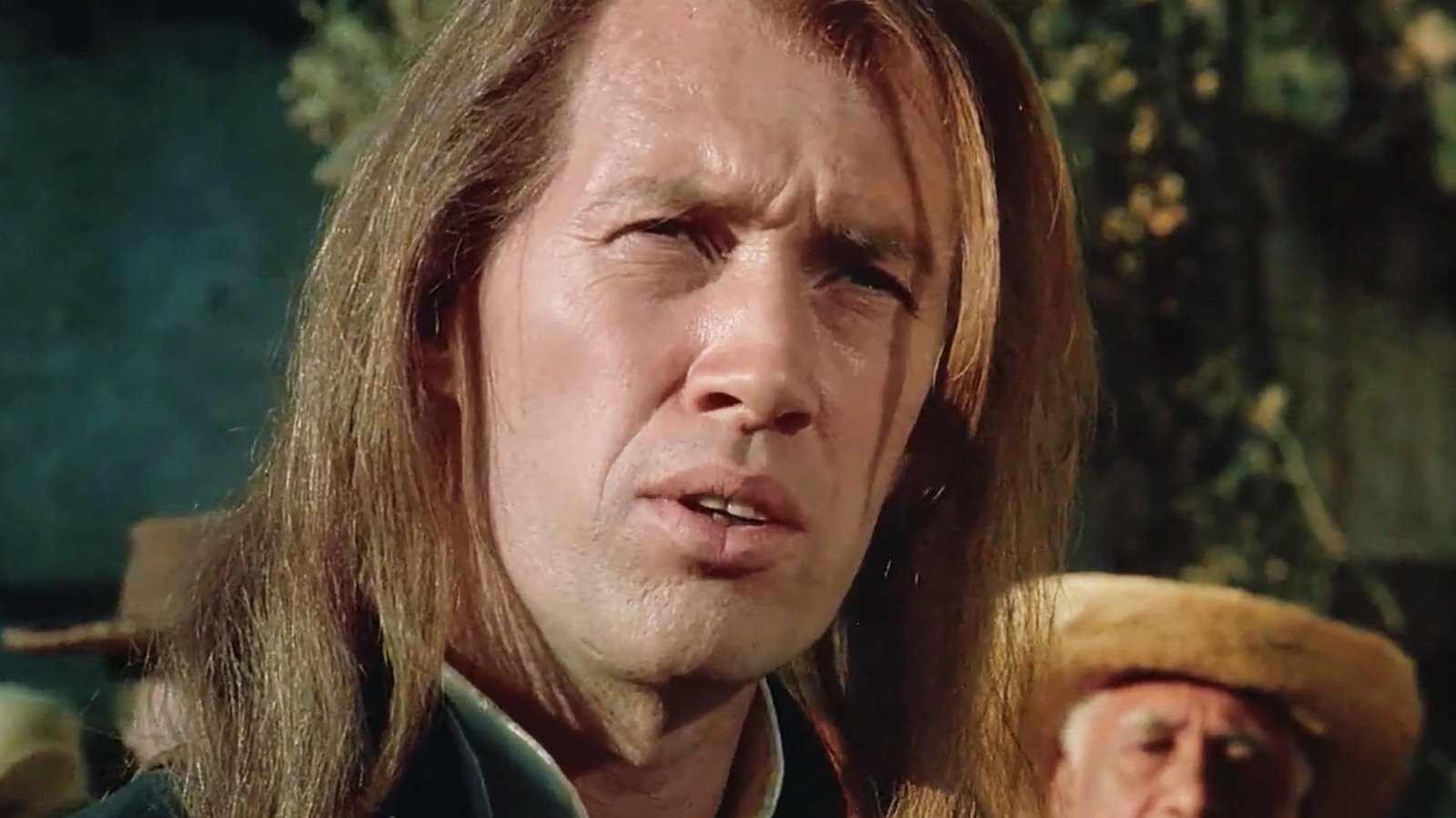
In 1966, David Carradine led a TV version of “Shane.” The story of a mysterious gunfighter who joins a homesteading family had been given a celebrated big screen adaptation more than a decade prior. As such, the television version was always going to struggle to outdo the movie. But it arguably deserved more than a single season before becoming completely overshadowed by other classic Western TV series.
The Johnson County War of the late 1880s/early 1890s provides the basis for every iteration of the “Shane” story. It saw settlers in the Northern Wyoming territory targeted by wealthy ranchers determined to secure the land and cattle for themselves, and went down as a legendary range war that ultimately influenced multiple Western dramatizations both on-screen and off. 1989’s “Heaven’s Gate” and the 2002 film “Johnson County War” are two silver screen examples, but the Johnson County War also provided the basis for numerous Western novels, including Jack Schaefer’s 1949 book “Shane.”
The novel was Schaefer’s first, and focused on a homesteading family whose land is threatened by a villainous cattleman and his group. Shane, a mysterious man who — as the story’s original title revealed, appeared to be a “Rider from Nowhere” — arrives to support the homesteaders. Despite wanting to leave his violent past behind, he’s forced to embrace it when the inevitable clash between his new surrogate family and the ranchers occurs.
Though “Shane” dealt with weighty themes such as class tensions and the power of simple human connection, it also featured an archetypal badass in the eponymous character, ensuring a swift adaptation in 1953. Sadly, by the time Carradine came to play his interpretation of that archetypal badass, Alan Ladd’s movie version had well and truly established himself in the collective consciousness.
Shane was a noble attempt to stretch the original story across 17 episodes
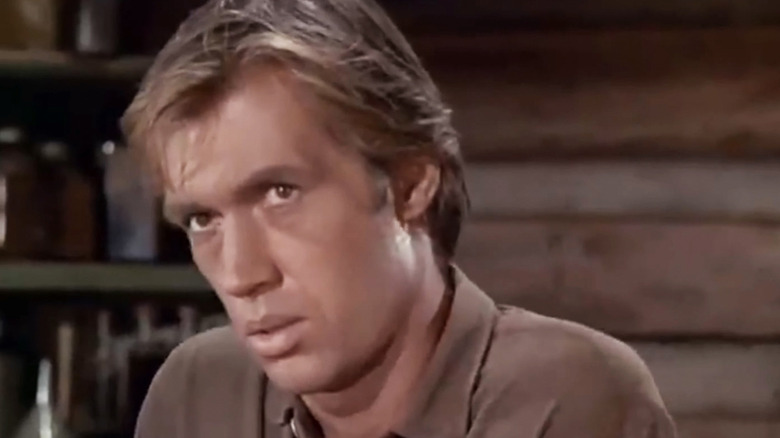
“Shane” received its first adaptation in the form of the 1953 film directed by George Stevens and starring Alan Ladd, which has since come to be regarded as one of the greatest Westerns of all time. What many might not realize, however, is that “Shane” received a small-screen adaptation, too. Unfortunately, ABC’s “Shane” didn’t last long enough to make anything like the impact of its cinematic counterpart.
Like the film, the TV version of “Shane” is set in the Wyoming Territory of 1889. But it diverges from the novel and film in significant ways. For one thing, the character of Joe Starrett, patriarch of the homesteading Starrett family, is nowhere in sight. Instead, his widow Marian Starrett (Jill Ireland) and her young son Joey (Chris Shea) live on the land alongside Marian’s father-in-law Tom Starrett (Tom Tully). When David Carradine’s Shane rocks up, then, he finds a family in need of a father figure. But the series doesn’t actually show the mysterious gunslinger’s arrival. Instead, when the pilot episode of “Shane” begins, the titular gunfighter has been living with the Starretts for some time.
You might be wondering how the writers managed to stretch the story of a simmering rivalry between small-time homesteaders and wealthy ranchers across an entire season. Well, they didn’t. “Shane” the TV series did feature the same villainous cattleman character as the movie in Rufe Ryker (Bert Freed). However, the small-screen Ryker turned out to be a little more agreeable than the movie version. While he begins the series as a major threat to the Starretts, Ryker is given somewhat of a character arc and ends up siding with the homesteaders in certain episodes. Meanwhile, Shane and Marian have a will-they-won’t-they situation going on.
Shane was a short-lived TV adaptation
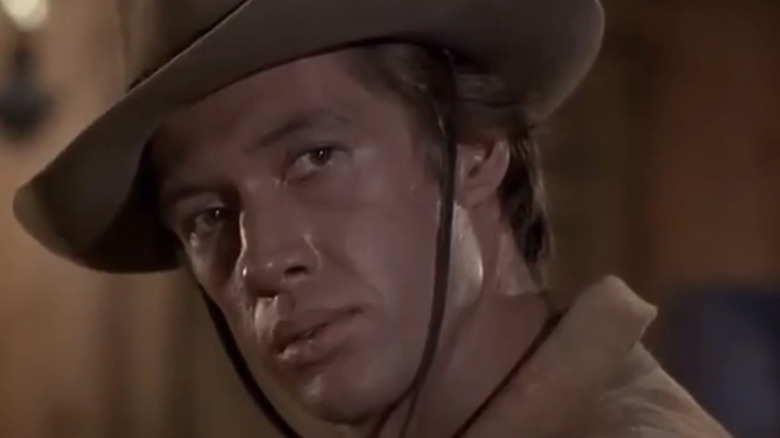
“Shane” wasn’t the first time a TV network tried to leverage the popularity of a Western movie based on a book. Before “Dallas” Jim Davis starred in the Western TV series “The Cowboys” based on the John Wayne film of the same name, which was in turn based on William Dale Jennings’ novel. The TV versions of both “The Cowboys” and “Shane” only lasted one season.
Of course, “Shane” debuted more than a decade after the film adaptation so audiences had plenty of time to move on from one of the best Western movies of the 1950s. But David Carradine was surely hoping for some residual interest among viewers. He was, after all, still very much an up-and-comer at the time, and wouldn’t secure his breakout role as Shaolin monk Kwai Chang Caine on ABC’s “Kung Fu” until 1972. As such, playing the role made famous by Alan Ladd was surely a thrill for the young actor, who at the time was, as a TV promo for “Shane” announced, “fresh from his Broadway triumph in the highly acclaimed ‘Royal Hunt of the Sun.'”
Alas, “Shane” only lasted 17 episodes before ABC pulled the plug. As the New York Times reported on October 21, 1966, “Shane” and Burt Reynolds’ “Hawk” were both cancelled at the same time. “The first national Nielsen rating report put the two shows near the bottom in public acceptance,” reported the Times. “No decision has been made yet on replacing the shows.” Meanwhile, Carradine found plenty of work as a supporting actor in Westerns including 1969’s “Heaven with a Gun” and 1970’s “The McMasters,” before finally finding major success on the same network that had failed to sell audiences on his version of Shane.