Why West Coast Tasman is a seat to watch this election
The West Coast has traditionally been a Labour stronghold, as the birthplace of the first coal-mining unions that helped shape the party’s roots.
As an electorate, it’s joined with Tasman, where the seat flipped at the last election from Labour stalwart Damien O’Connor to National’s Maureen Pugh.
A host of new faces are vying for the seat, with Pugh’s retirement and O’Connor no longer contesting the electorate, after 33 years as an MP.
Why is it interesting?
Covering more than 32,000 sq km, West Coast Tasman is the second-largest electorate measured by land. It spans almost the entire length of the South Island’s West Coast, up to Farewell Spit and across Tasman Bay, and includes more than half the country’s national parks.
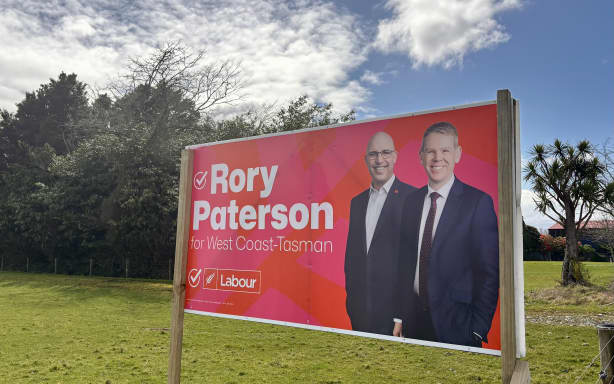
North Canterbury-based teacher Rory Paterson is running for Labour in West Coast Tasman.
RNZ/Samantha Gee.
Red is baked into the coast’s history. The Blackball miners’ strike broke out in 1908, after a move to enforce a 15-minute lunch break and extend the working day to 10 hours.
The miners were re-instated after almost three months of resistance, returning to work on eight-hour shifts, with a 30-minute lunch break.
Radical unionism from the coast is said to have changed the course of New Zealand’s political history, leading to the formation of the Labour Party in 1916.
Traditionally, the West Coast has produced the candidates, but most voters are in Tasman, which heavily influences the election outcome.
The largest towns are Motueka, Westport and Greymouth, and while mining still has strong support on the coast, parts of Tasman, like Golden Bay, are opposed to the industry.
What happened last election?
In 2023, Pugh garnered 13,317 votes, defeating O’Connor by 1017 votes. National also won the party vote by a 4072 margin.
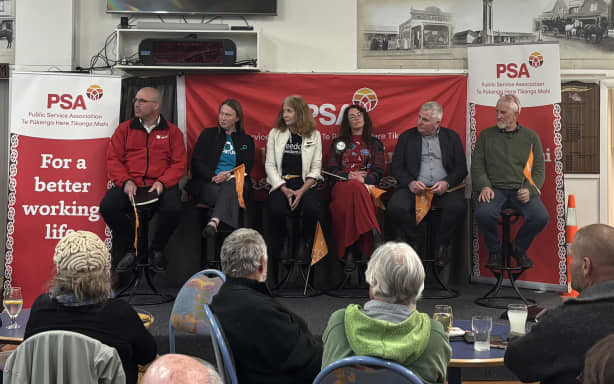
Some of the West Coast Tasman candidates at a PSA Union debate in Motueka.
RNZ/Samantha Gee.
The result was a significant jump in support for Pugh, who lost to O’Connor by 6208 votes at the 2020 election.
The electorate was created for the 1996 election and had been held by O’Connor since that date, with the exception of two terms – one in 2008 under National’s Chris Auchinvole and most recently under Pugh.
The Labour Party needs a 2.5 percentage-point swing to win the seat back in November.
Who’s standing?
With Pugh’s retirement and O’Connor moving to Dunedin, the major parties have put forward new candidates.
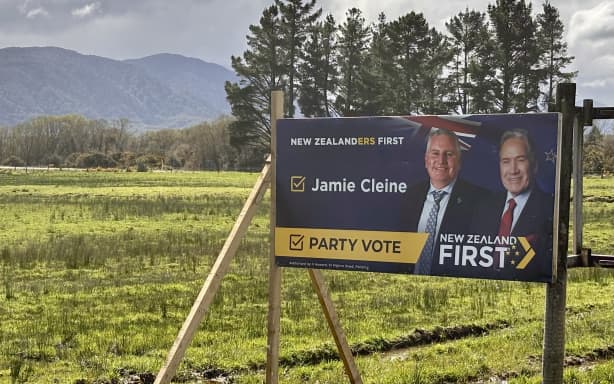
Former Buller Mayor Jamie Cleine is running for NZ First in West Coast Tasman.
RNZ/Samantha Gee.
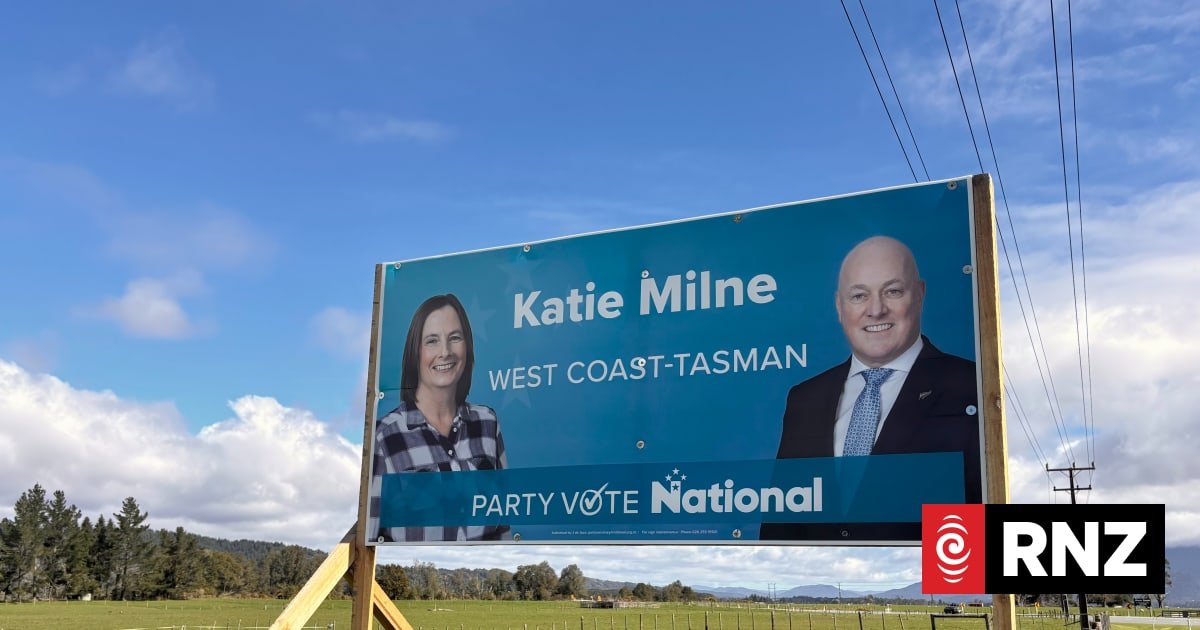
Former Federated Farmers president and dairy farmer Katie Milne is running for National, while North Canterbury-based teacher Rory Paterson is standing for Labour.
There are a host of new faces among the minor parties too, with former Buller Mayor Jamie Cleine running for NZ First, foodtruck owner Andrew Beaumont standing for the Greens and Greymouth business owner Cindie Uddstrom for the Opportunity Party.
The resurrected Alliance Party is represented by Riwaka local and software developer Sara Dyatlova-Murphy, Murchison Four Square owner Janelle Hocking is standing for ACT and lawyer Sue Grey is running for the NZ Outdoors & Freedom Party.
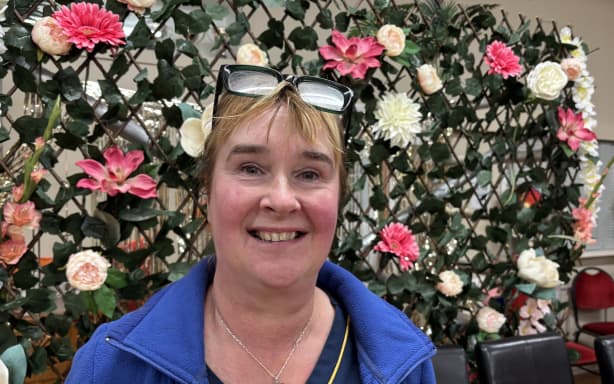
Greymouth support worker Sonia Smith says she supports the mining industry on the West Coast.
RNZ/Samantha Gee.
What do the locals say?
If there is one thing that divides West Coast Tasman voters, it is mining.
Greymouth support worker Sonia Smith said the industry needed to be supported.
“We don’t want to see mining shut down,” she said. “I know the Greens want to do that, but I don’t want to see that.
“I think it does create a lot of jobs, and as long as they look after the land and put it back the way they found it, I’m all in favour.
“My grandparents came here from England and my grandfather was a coal miner, so we’ve got it in our blood.”
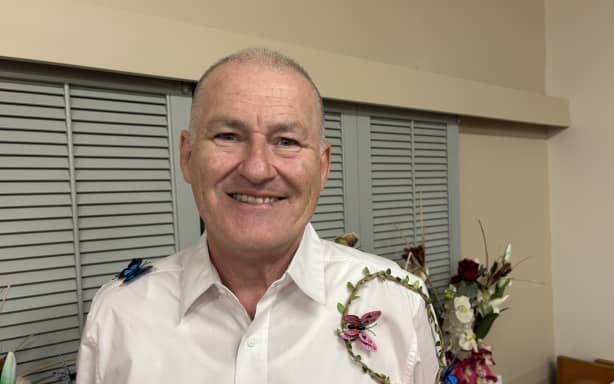
Paul Kearns is a PSA union organiser who lives in Runanga on the West Coast.
RNZ/Samantha Gee.
Runanga’s Paul Kearns, a PSA union organiser, said the West Coast was often forgotten by politicians.
“We don’t seem to have a vision for the coast, apart from digging more holes and looking for more minerals,” he said. “That’s not development, that’s going backwards.
“We’ve had 150 years and what have we got to show for it? Failed infrastructure, falling down heritage, people leaving in droves.”
Thomas Bleeker moved to Hokitika from Tennessee in the United States this year to be closer to family.
While he cannot yet vote, he is interested in the overhaul of environmental and planning laws.
“I am a citizen, but you have to live in the country for 12 months to be able to vote, so I have a horse in the game, but I can’t bet on the horse,” he said.
“It’s really interesting here on the coast. I think there are some really unique sort of regional needs that aren’t necessarily applicable to the rest of the country.”
In Motueka, on the Tasman side of the electorate, Leslie Roden has been a Labour voter all his life, but said he had now gone off politics.
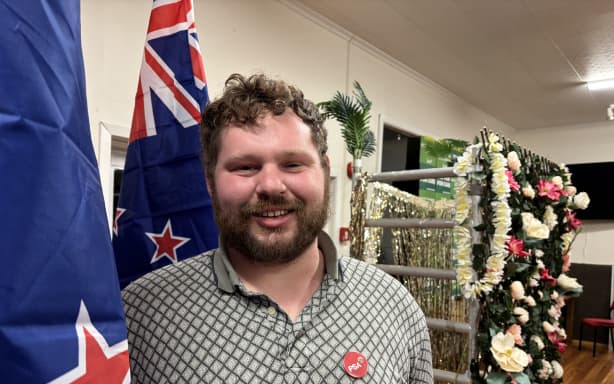
Thomas Bleeker moved to Hokitika from Tennessee in the United States this year and says the West Coast has unique needs.
RNZ/Samantha Gee.
He told RNZ he did not know who he would vote for at the election and had spoken to many people who felt the same way.
“There are a lot of unhappy people out there and it’s not fair,” he said. “People think that this is one of the most beautiful countries in the world and it is, but we’re all struggling.
“Not so much the people up the top, but there are quite a few of us down the bottom here.”
Teacher aide Jodi Ellis, who recently moved to Motueka from Ngakawau on the West Coast, said politicians were not doing enough to look after the environment.
“Taxpayers are paying $3 million a year until 2100 to fix up the pollution that happened from Stockton Plateau, and now Bathurst and Talley’s are wanting to do the same thing again on the Denniston Plateau,” she said.
Smith said she did not want to see that happen, and hoped the next government would champion conservation and tourism initiatives over mining.