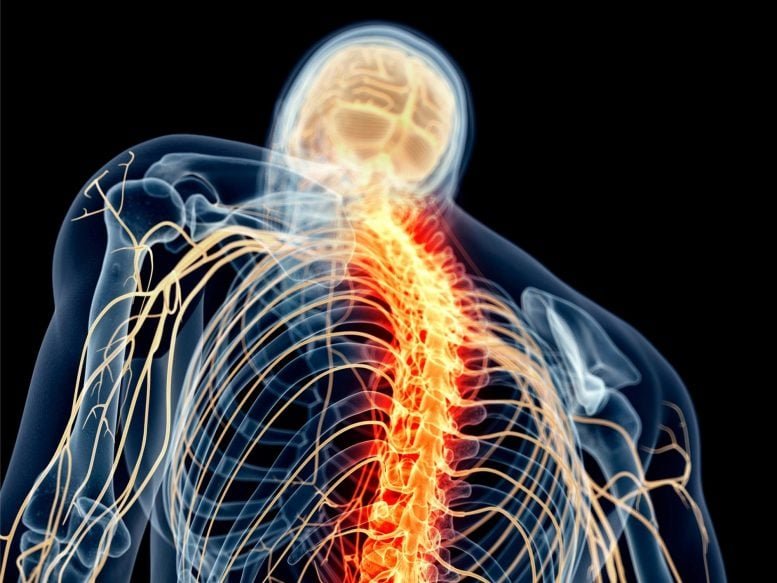
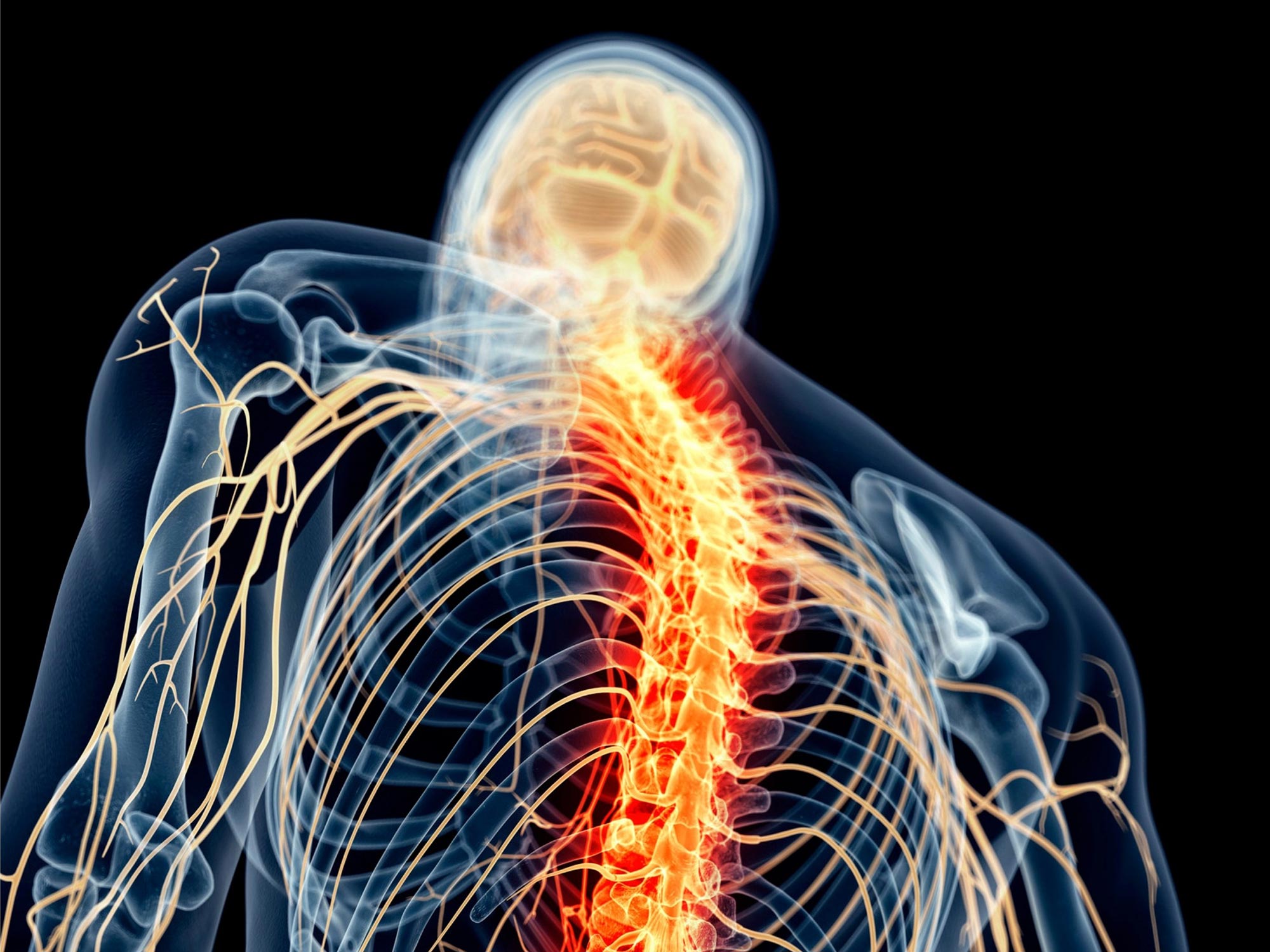
A new antibody-based approach may be able to suppress abnormal nerve pain without dulling the body’s normal warning signals.
Neuropathic pain can persist after an injury because damaged nerves may continue sending pain signals even when no new tissue damage is occurring. In a new preclinical study, researchers found that antibodies targeting a pain-related sodium channel could suppress those abnormal signals in rats for days while leaving normal protective pain sensation largely intact.
The experimental antibodies target Nav1.7, a voltage-gated sodium channel found in sensory neurons that helps generate and transmit electrical signals involved in pain.
Targeting a Key Pain Channel
Associate Professor Daisuke Uta of the University of Toyama and Dr. Sosuke Yoneda of Shionogi & Co., Ltd. investigated whether antibodies engineered to recognize Nav1.7 could provide sustained relief from neuropathic pain. Their findings were published in the journal Pharmaceutics.
“NaV1.7 is a specialized sodium ion channel in nerve cells that plays an important role in sensing and transmitting pain signals,” explains Dr. Uta.
The team developed humanized antibodies and first tested them in cells. Two candidates, Clone1 and S-151128, bound strongly to Nav1.7 and reduced electrical activity associated with pain signaling. Clone1 showed at least 650-fold selectivity for Nav1.7 over the other Nav subtypes tested, while S-151128 showed at least 1300-fold selectivity.
Pain Relief That Lasted for Days
The researchers then tested the antibodies in rats with partial sciatic nerve ligation (PSNL), a model of neuropathic pain caused by nerve injury. The antibodies were administered intravenously.
Both reduced the animals’ sensitivity to mechanical stimulation in a dose-dependent manner. At some doses, the effects were comparable to pregabalin, a medication commonly used for neuropathic pain. After 96 hours, however, pain relief from the antibodies remained stronger than the effect produced by pregabalin.
The nervous system measurements showed a similar pattern. After nerve injury, neurons in the spinal dorsal horn displayed increased spontaneous activity and stronger responses to mechanical stimulation. Antibody treatment reduced both.
Suppressing Abnormal Nerve Activity
The researchers also examined dorsal root ganglion neurons, which carry sensory information toward the spinal cord. Fewer neurons showed mechanically induced phosphorylation of extracellular signal-regulated kinase (pERK) after antibody treatment. Because pERK is a marker of neuronal activation, the result supported the evidence that the antibodies were suppressing abnormal pain signaling.
The researchers were concerned whether blocking Nav1.7 would also weaken normal protective pain. In animals without nerve injury, none of the antibodies significantly changed responses to mechanical stimulation.
The animals were also tested on a rotating-rod task used to measure movement and coordination. Pregabalin impaired performance at the tested dose, while the antibodies did not significantly affect motor function.
“Targeting Nav1.7 could help silence abnormal pain signals while preserving normal protective pain sensation,” notes Dr. Uta.
From Animal Studies to Clinical Testing
The findings remain preclinical. The researchers could not accurately determine how much antibody reached the injured nerve, and the treatment was evaluated in only one neuropathic pain model. Further studies will be needed to test whether the effects hold across other models and in humans.
One of the antibodies, S-151128, is already in clinical trials, where researchers can begin testing whether the effects seen in animals translate into a safe and effective treatment for people with neuropathic pain.
Reference: “A Systemically Administered Humanized Anti-Nav1.7 Antibody with Long-Lasting Analgesic Activity and Preserved Physiological Nociception” by Sosuke Yoneda, Daisuke Uta, Kana Yasufuku, Takuya Yamane, Saho Yoshioka, Keiko Takasu, Takaya Izumi, Sayaka Fujita, Daiki Nakamori, Shiori Kawasaki, Tatsuya Takahashi, Mai Yoshikawa, Koichi Ogawa and Erika Kasai, 20 June 2026, Pharmaceutics.
DOI: 10.3390/pharmaceutics18060757
Funding: Shionogi & Co., Ltd.
Never miss a breakthrough: Join the SciTechDaily newsletter.
Follow us on Google and Google News.