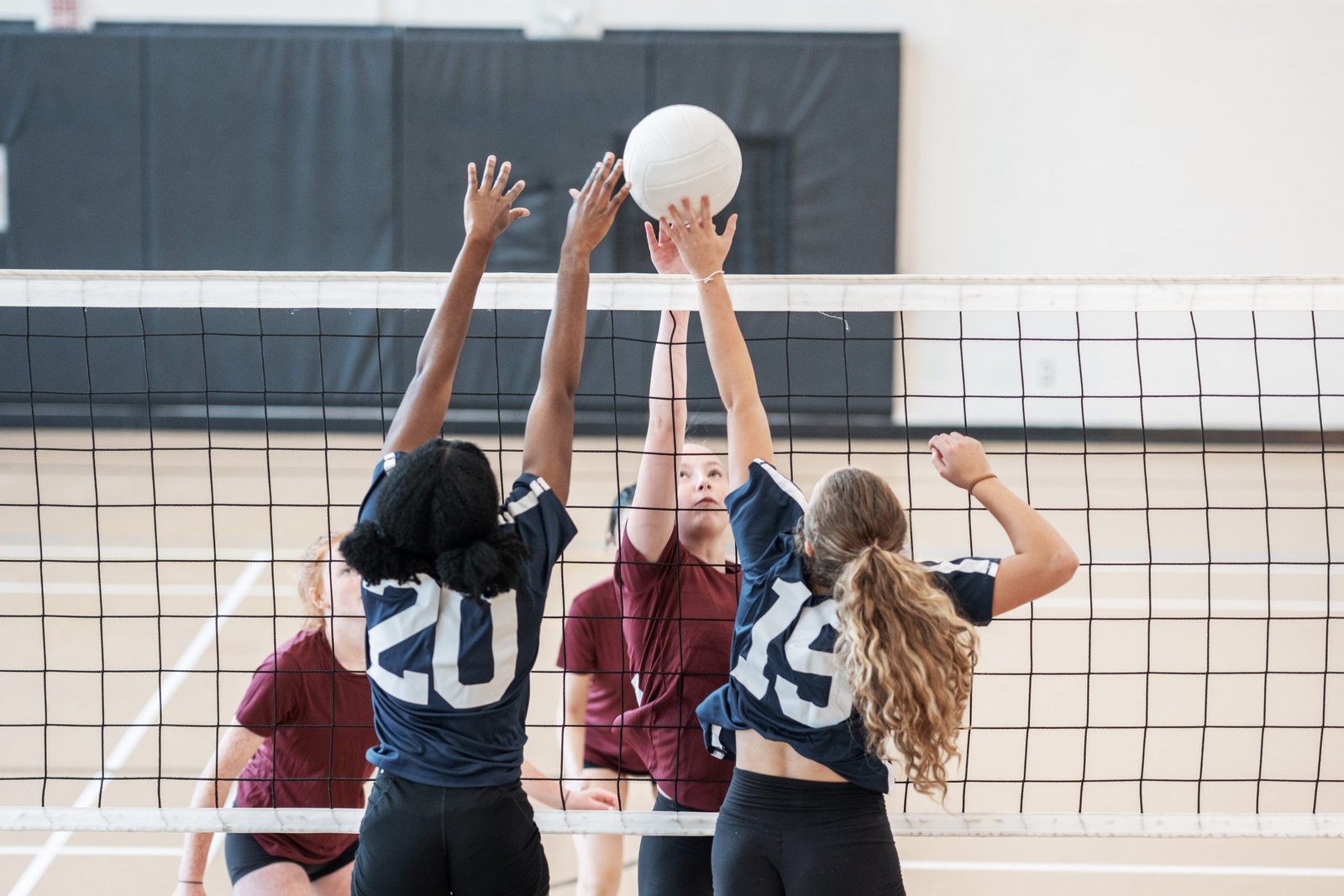
We need to stop telling girls to be more confident.
Not because confidence doesn’t matter – it does. But when we describe lower participation by girls and young women as a “confidence gap”, we risk putting the responsibility in the wrong place.
Aotearoa already has the evidence. Sport New Zealand’s latest findings in its spotlight on girls and young women’s participation shows they’re less likely than boys and young men to meet physical activity guidelines, feel confident being active and enjoy their experiences at school.
Insights collected from over 62,000 young people in 2024-25 showed around 58 percent of girls and 50 percent of young women met physical activity guidelines, with participation higher among boys and young men. Young women are almost three times more likely than young men to say they are “not confident enough” to be active.
Girls are also more likely to say they dislike people watching them being active. Making mistakes, too-competitive environments and having no one to play with are other challenges to their participation.
The report calls this a confidence gap, but we think it should be called a system gap.
One of the most revealing findings is not about girls at all. It is about where physical activity happens.
For tamariki, there’s no gender difference in enjoyment when they’re active after school or at the weekend. Yet differences emerge at school, including during physical education and break times. Among rangatahi, girls also report lower satisfaction with physical activity across many school contexts.
So here’s the question we should be asking: If girls enjoy being active outside school, why do we assume the problem is the girls when they don’t enjoy it at school?
Perhaps they’ve not suddenly lost their confidence, or the environment, the rules or the expectations have changed. Or maybe the way adults organise, teach, coach and judge physical activity is part of the problem.
This matters because the language we use determines where we look for solutions.

If we say girls lack confidence, we develop programmes to build their confidence. If we say girls need more resilience, we teach them resilience. If we say girls need more motivation, we try to motivate them.
Running another programme to “fix” girls and young women is the easy response, but changing the system is harder. It requires long-term commitment, sustained investment and a willingness to examine the structures and environments producing these inequities.
Given the poor experiences many girls report within the school system, education, sport and active recreation need to work together to drive systems change. These cannot be treated as separate sectors. The experiences girls have at school, in community recreation and in sport are connected.
If the problem is the environment, we’re effectively asking girls to adapt to a system that wasn’t designed with their needs, experiences or aspirations in mind. That’s not equity.
At Women in Sport Aotearoa | Ngā Wāhine Hākinakina o Aotearoa, our kaupapa is to transform society through leadership, advocacy and evidence so all women and girls have equity of opportunity to participate, compete and build careers in play, active recreation and sport.
That means moving beyond equality to equity. Equality assumes everyone needs the same thing, while equity recognises people experience different barriers and may need different resources, opportunities and support to achieve fair outcomes. The distinction is critical.
If a girl is worried about being watched, making mistakes or being judged, asking her to be more confident places the burden on her. Instead, we should ask who is watching and why.
Is making a mistake treated as part of learning, or as failure? Is physical education designed around competition, or does it create space for enjoyment, creativity, connection and different abilities?
Does she have friends to participate with? Does she feel safe? Does she see herself reflected in the teachers, coaches, leaders and role models around her? Does she have genuine choice?
These are system questions, that require system responses.
There is also a uniquely Aotearoa perspective we should bring to this conversation. In te ao Māori, wellbeing is collective. Whanaungatanga reminds us that our relationships and connections matter; mana reminds us that every person has inherent value and dignity.
We don’t simply ask whether an individual has overcome their barriers. We ask whether the environment enables people to flourish – and that changes how we understand confidence.
A girl who feels she belongs, who can participate with her friends, is supported to try something new, can make mistakes without humiliation and sees people like herself represented in sport is more likely to become confident.
Perhaps confidence is not the starting point, but what happens when belonging comes first.
This is about much more than getting girls through PE class or increasing participation statistics. The experiences girls have with physical activity can shape their relationship with movement, health, competition, leadership and their own bodies for decades. They also shape who believes they belong in sport.
The pathway from playground to podium is important. So, too, is the pathway from participant to coach, official, administrator, executive and board member. If girls are repeatedly given the message that sport isn’t really for them, we shouldn’t be surprised when fewer women are represented at the top of sporting organisations.
Participation, leadership and decision-making are connected.
We need to invest in quality experiences, not simply more opportunities. We need safe and inclusive environments, accessible and affordable participation, and teachers, coaches and leaders who understand that girls can experience sport differently from boys.
We need to value social connection and enjoyment alongside competition, and to listen to girls and young women about what works for them.
Crucially, girls and young women need to be at the centre of designing a system with equity as its foundation. And we need to stop interpreting every disparity as a deficit in girls and women. When participation is lower, don’t immediately ask what’s wrong with girls – ask what’s happening around them.
Are our schools and sporting organisations creating environments where girls feel safe, valued and able to belong. And are education, sport and active recreation working together to change the conditions that shape participation.
The challenge is not to make girls fit the sporting system – it’s to build a sporting system where girls can thrive.
Fixing the conditions around them isn’t lowering the bar. It’s raising our expectations of the system, and committing to the long-term change needed to make equity the foundation. And that’s where real gender equity begins.
- Professor Sarah Leberman MNZM and Louisa Wall are board members of Women in Sport Aotearoa | Ngā Wāhine Hākinakina o Aotearoa (WISPA).